
Skip to content
Food-processing environment — hygiene and continuity of operations.

Food processing

Production environments where hygiene, methods, and operating continuity shape the day.

Environments where operational control is essential

Food-processing plants, transformation workshops, and food production sites: cleanliness of shared zones, respect for agreed methods, and continuity of operations matter as much as the reception image. Locker rooms, circulation, docks, and authorized production spaces coexist with tight calendars. GSF Canada provides supervised cleaning — in agreed zones, to your rules, with a nearby contact. This page claims no HACCP certification and no food-industry accreditation.

Understanding site constraints

  • Soil build-up in circulation areas, locker rooms, and docks
  • Work poorly timed against production windows
  • Gaps between administrative areas and production zones on the same site
  • Teams not properly informed on hygiene and circulation rules
  • A blurred line between building upkeep and process cleaning
  • Fragile continuity during team substitutions or peak periods
  • Transition zones (airlocks, corridors, washrooms) treated as secondary

Adapting methods and frequencies

In food processing, cleaning is never the main subject — and that is exactly why it has to be framed. A provider improvising crosses a production flow, enters an unauthorized zone, or applies an unsuitable method. A provider that has understood the site’s rhythm and hygiene instructions becomes discreet and predictable instead. So the question is not only “to what level do we clean”, but “where, when, and under which methods”. Locker rooms and circulation matter too: they affect every employee, every day.

Coordinating interventions with operations

We start from your production calendars and written instructions, then divide the site into zones with explicit rules: what is included, what is excluded, which intervention windows are possible, and which methods apply. Teams are informed before their first visit. Scope does not widen out of habit: what is not written is not assumed. No HACCP certification, food-industry accreditation, or process cleaning capability is claimed here.

How GSF supports this environment

According to site needs and the agreed scope: commercial cleaning of defined zones (offices, washrooms, circulation, reception — and production zones only if the agreement specifies them); building technical services to support facility reliability; multiservices to reduce vendor fragmentation on one site. No food-process cleaning capability or HACCP certification is claimed here.
Continuity

Continuity aligns with your production calendars: planned work in agreed windows, adjustments during shutdowns or peak periods, without invented response-time promises.

Quality expectations

Typical expectations: floors and washrooms maintained, stable locker rooms and circulation, respect for agreed methods, and consistency across shifts. Criteria are defined with you; no food-compliance indicator is published.

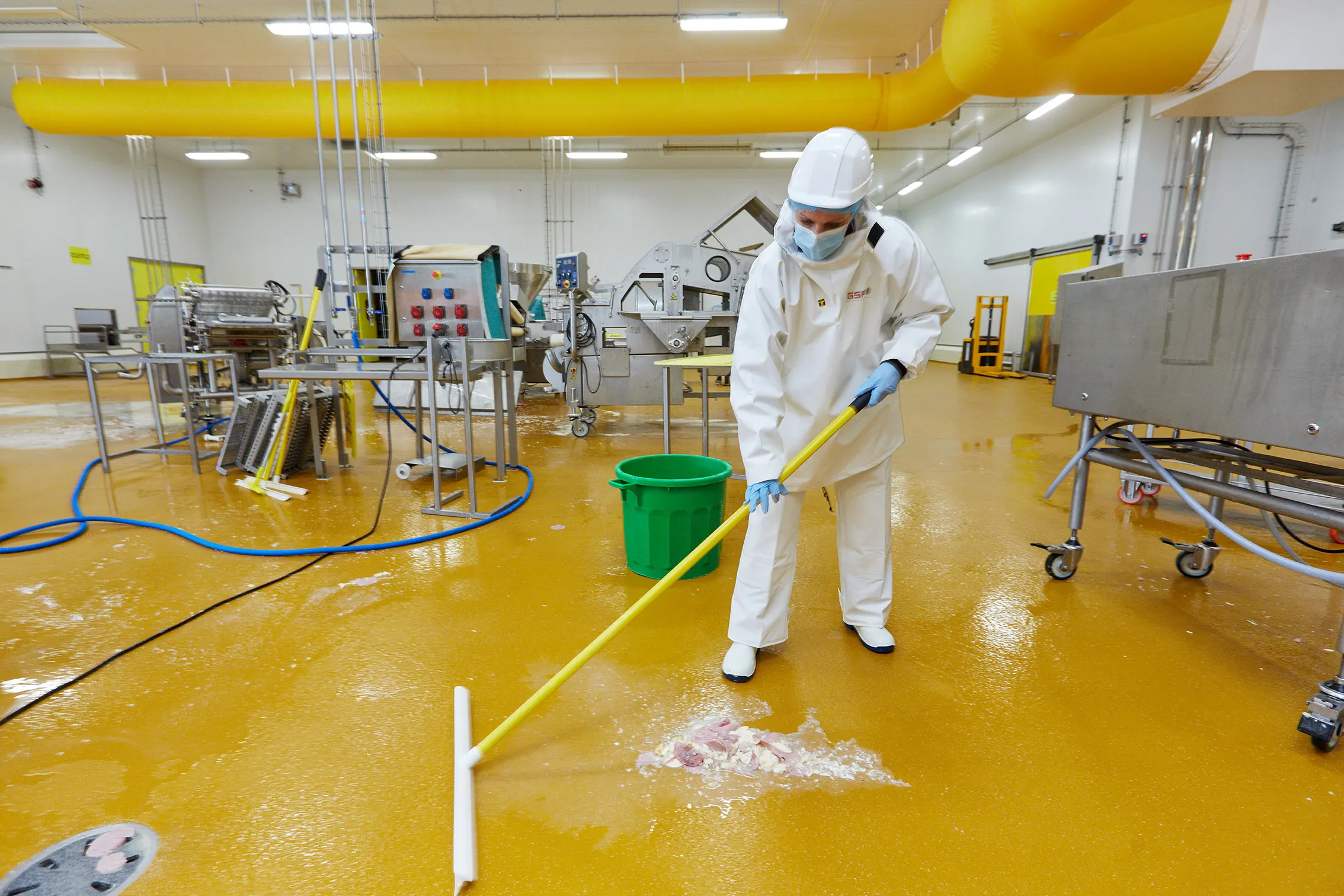
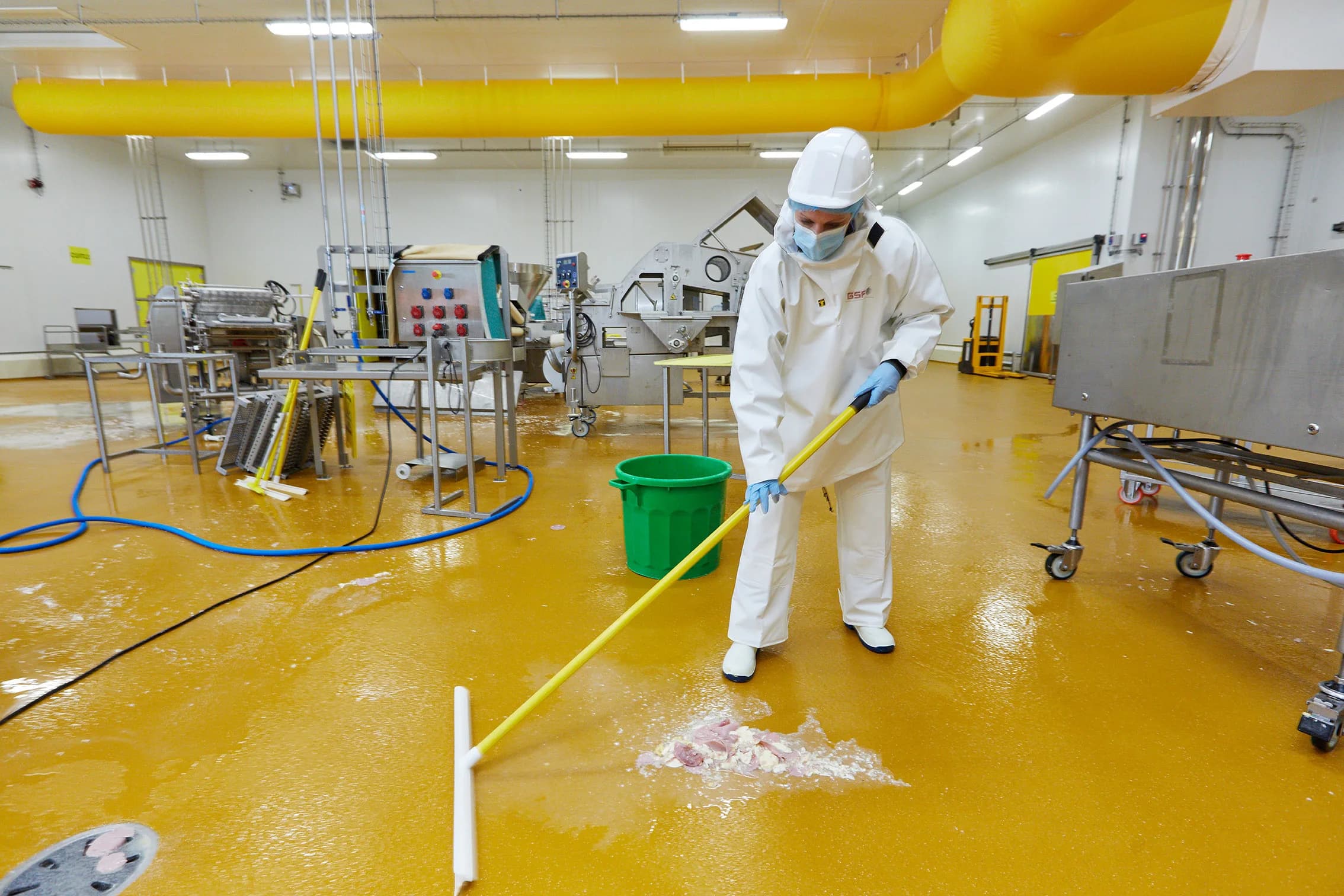
Cleaning in a food-processing environment — generic operational imagery.

What that covers in practice

Illustrative examples — exact scope is defined in the agreement.

  1. 01Administrative offices, meeting rooms, and site reception areas
  2. 02Washrooms, locker rooms, and staff break rooms
  3. 03Circulation, airlocks, and authorized transition zones
  4. 04Receiving and shipping docks within the agreed scope
  5. 05Production zones only when the agreement specifies them
  6. 06Building technical support when the agreement calls for it

Customized scope

Exact scope — production, docks, offices, washrooms, locker rooms — is set in the agreement. We do not advertise unapproved specialized capabilities. According to the site, some production zones may be excluded or limited.

Coordination

A nearby contact works with your site leads, informs teams on hygiene and circulation rules, and — under multiservices — aligns cleaning and technical work around the same operational priorities.

Practical benefits

  • Less interference with production thanks to framed windows
  • Site methods and instructions held in authorized zones
  • More stable shared areas for staff
  • One thread when several trades work the site

Our approach to quality

Quality criteria are defined with you, zone by zone, taking into account what the site can observe between shifts. Respect for the site’s hygiene methods and instructions is part of those criteria, on the same footing as the visible result. Gaps reach you through the nearby contact. No food-compliance indicator, HACCP rate, or response time is published here; follow-up arrangements are set out in the agreement.

Responsible practices

In a food-processing setting, a leaner service comes down to concrete choices: products and dosing matched to the surfaces involved and authorized by the site, equipment maintained, and residue routed to the streams already in place. Our teams also flag what they notice in passing — even outside scope. Documented company certifications are listed on Our commitments; no food-industry certification is claimed here.

Method

We frame zones, hours, and methods with you, inform teams on agreed rules, and follow execution with a nearby contact. No food-industry certification is claimed on this page.

Relevant service families

GSF Group

Expertise enriched by Group experience

GSF Canada is part of the history and know-how of GSF Group. That international experience deepens our understanding of specialized environments while leaving local teams to adapt solutions to the Canadian context.

Common questions

GSF Canada

Let’s talk about your environment

Tell us about your site, constraints, and priorities — we will frame a tailored proposal.